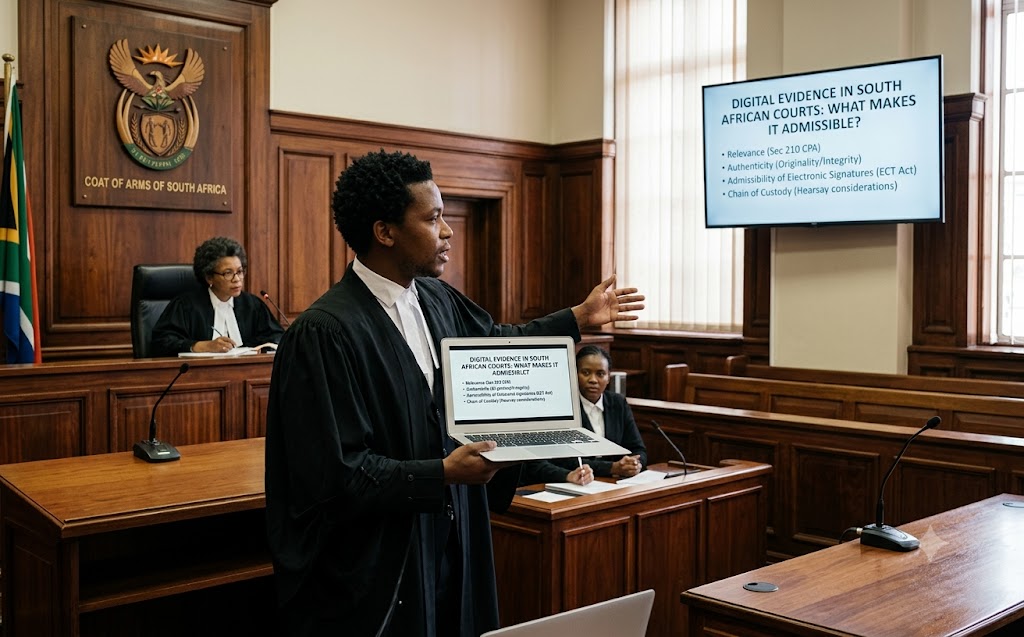
Digital evidence has become an important part of modern litigation and criminal proceedings in South Africa. WhatsApp messages, CCTV footage, emails, mobile phone records, GPS data, computer files, social media posts and other electronic records can provide valuable evidence about communications, events and activities. Just having a screenshot, recording or electronic file does not automatically make it reliable evidence. Courts in South Africa consider the applicable rules of digital evidence. Businesses, individuals and legal professionals must understand how digital evidence is collected, preserved and presented. This will be critical when electronic information forms part of a dispute or investigation.
What is Digital Evidence in South Africa?
Electronic evidence in South Africa is the information stored or transmitted in electronic form that may be relevant to legal investigation or court proceedings. This may include emails, WhatsApp conversations, SMS messages, photographs, videos, CCTV recordings, computer files, server logs, GPS information, browser history, social media records and mobile device data. Under the ECTA, a data message includes data generated, sent, received or stored electronically, including stored records. The courts in South Africa have recognized any forms of electronic information including videos and electronic records, as potentially admissible evidence.
Digital Evidence admissibility in South African Courts
- Relevance and Authority: Digital evidence must be relevant to the matter before the court and its authenticity should be established. A party relying on WhatsApp conversations, email or digital files must be able to prove that the evidence is what it claims to be and connect it appropriately to its alleged source. South African case law confirms that ECTA Electronic Evidence is subject to ordinary evidentiary requirements such as relevance and authentication.
- Reliability of Digital Record: Section 15 ECTA admissibility requires consideration of the reliability of how a data message was generated, stored and communicated. The court can also consider how reliably the integrity of data was maintained. These factors can influence the admissibility of the evidence in the South African courts.
- Preservation and Integrity: ECTA digital evidence in South Africa must be preserved in a way that allows investigators and the court to understand whether the information remained unchanged. A proper forensic process can include documenting the evidence source, creating forensic copies and maintaining an audit trail. South African Law Reform Commission material has highlighted preservation of original data, audit trails and competent examination as key considerations when handling electronic evidence.
- Certification and Business Records: Sector 15 ECTA digital evidence provides a specific route for certain data messages created in the ordinary course of business, including certified copies, printouts or extracts, to be admitted as evidence, subject to statutory requirements. South African courts have considered the importance of proper certification and proof when parties rely on electronic records.
- Maintaining Clear Chain of Custody: A documented chain of custody helps establish what happened to digital evidence from collection through examination and presentation. Records must identify who collected the evidence, when it was collected, how it was acquired, where it was stored and who subsequently accessed it. This documentation can help address challenges concerning alteration, contamination or mishandling.
- Expert Evidence can explain Technical Issues: Digital forensic experts can help courts understand technically complex evidence, including metadata, deleted files, device extractions, logs and forensic acquisition methods. Their role is not simply to present data but to explain the methodology used to acquire and analyze it and the limitations of the findings.
Why Digital Forensics Matters in Court Evidence?
A screenshot or exported conversation can provide useful information, but it may not preserve all technical context behind the original data. A professional forensic specialist can help identify the information source, preserve relevant evidence, document the acquisition process and analyze available metadata and other technical artefacts. This is important when the opposing party disputes whether the message was authentic, claiming the information was altered or challenging how the evidence was obtained.
Case Study
A South African business was involved in allegations that an employee had shared confidential company information through a mobile messaging application. The company initially had screenshots of the conversations, but the opposing side questioned whether the screenshots had been edited or taken out of context.
The business worked with a professional digital forensics expert who examined the relevant device and available electronic records using a documented forensic process. The expert preserved the relevant data, recorded the acquisition methods, analyzed available metadata and prepared a forensic report explaining the findings and limitations. This documented process gave the legal team a clear evidentiary foundation for presenting the electronic material and responding to challenges concerning authenticity and integrity. This example demonstrates why professional digital forensic collection and documentation can be key when electronic evidence is expected to withstand scrutiny in court.
When electronic evidence could influence a legal dispute, professional collection and forensic preservation should begin before data is altered, deleted or overwritten. Work with a digital forensics professional who knows evidence preservation, forensic acquisition, analysis and courtroom requirements.
FAQs
- How is digital evidence admitted in South African courts?
It is admitted in South African courts when it is relevant, authentic, reliable, properly preserved and meets applicable requirements under ECTA and other evidence laws. Work with the TCG Forensics team of digital forensic experts who will ensure your digital evidence is accepted in court. - What makes digital evidence admissible in South African courts?
Digital evidence is acceptable when it is relevant, authentic, reliable, properly preserved, and its integrity and source can be established as per South African evidence law and the ECTA. - What law governs digital evidence in South Africa?
The Electronic Communications and Transactions Act 25 of 2002 provides a key statutory framework for admissibility and evidential weight of electronic data messages in South Africa. TCG Forensics team will help make your digital evidence admissible in court.
About the Author
TCG Forensics is a professional digital forensics and cybersecurity firm providing expert digital investigation and forensic evidence services in South Africa. The team helps businesses, legal professionals and individuals with digital evidence collection, forensic analysis, data recovery and incident investigations. The digital forensic experts focus on preserving digital evidence with appropriate forensic procedures to support investigations and legal proceedings. With a perfect blend of technical expertise and structured forensic methods, TCG Forensics helps clients understand, preserve and present critical digital evidence in court.