Your smartphone can contain far more evidence than what appears on its screen. From deleted messages to call records to photographs, app activity, location information and browser history, the phone can preserve valuable digital traces. Cell phone Forensics is a scientific process of identifying, extracting, preserving and analyzing data from smartphones while maintaining the credibility of the evidence. Whether the matter is about corporate investigations, employee misconduct, fraud, cybercrime, litigation or personal disputes, the phone forensic investigation uses specialized tools and documented procedures to determine what information can be recovered.
What is Mobile Phone Forensics?
Mobile Device Forensics is a branch of digital forensics focused on the examination of smartphones and other mobile devices to recover and analyze potentially relevant digital evidence. A professional cell phone forensic expert examines data stored on the device, applications, system files, cloud-related information, media and other available sources. The process involves securing the device, preserving evidence, creating a forensic acquisition, analyzing significant artifacts, and documenting findings in a defensible report. Professional cell forensics prioritizes evidence preparation and chain of custody so that recovered information can be properly analyzed in an investigation or legal proceedings.
What data can be recovered from Cell Phone Forensics?
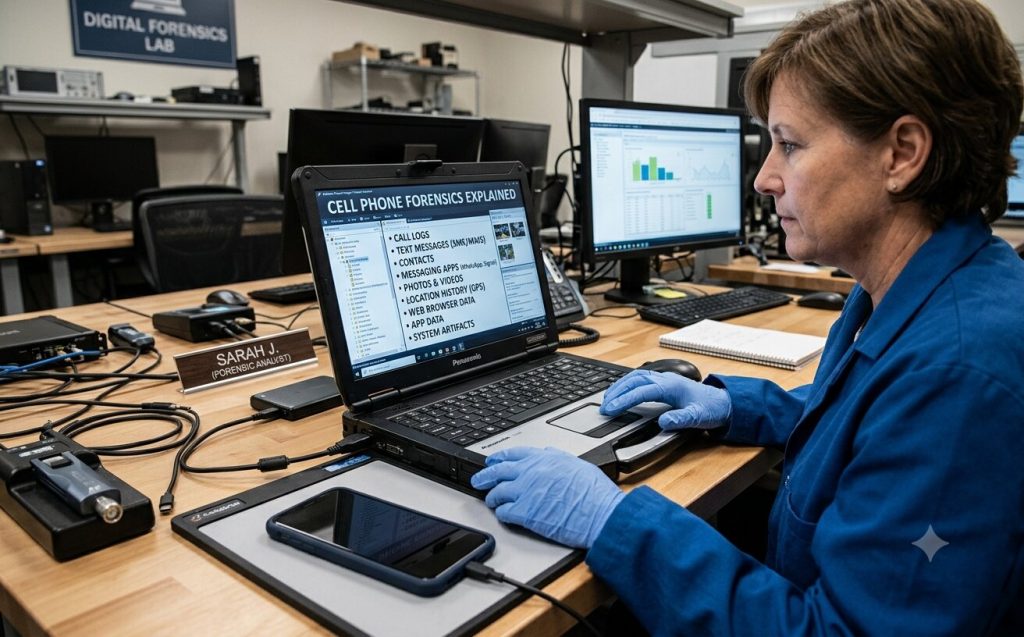
- Deleted Messages and Communications: Depending on the device, application, operating system and available forensic acquisition, mobile phone data recovery experts may recover remnants or records related to delete SMS messages, emails, contacts, instant messaging, applications or other communications. The phone may not have the original message in it, but related databases, notifications, attachments, timestamps or conversation metadata may provide useful investigative leads.
- Photos, videos, and Multimedia Files: The cell phone data recovery specialists can identify existing photographs and videos along with related metadata such as creation dates, modification information, file name and, where available, location data. Application caches, backups, thumbnail databases and other artifacts may contain traces of media that are no longer visible through the phone’s normal interface.
- Call logs, Contacts and Location Information: Call history, contact records and location-related artifacts establish the communication pattern and movements. Based on the available evidence, phone data recovery investigators may examine GPS information, application location records, Wi-Fi related artifacts, maps, activity and other location indicators. These sources are interpreted with great care by the forensics experts using cutting-edge tools, as the presence of location data does not automatically prove where a person is at a particular moment.
- App, Browser and Device Activity: A smartphone can leave digital traces through web browsing, searches, downloads, installed applications, system events and account activity. Forensic data recovery experts may analyze application databases, browser artifacts, timestamps, device configuration and other technical records to reconstruct relevant activity. The experts not only aim to collect the data but to establish a reliable timeline and identify connections between digital artifacts.
How do Cell Phone Forensic Analysis Experts Work?
- Preservation: The device is secured to reduce the risk of remote alteration, accidental deletion or data changes.
- Identification: Investigators document the device, model, operating system, condition and other important information.
- Acquisition: They use the available forensic methods to obtain data while reducing changes to the original evidence
- Analysis: The information extracted is examined for communication, files, application artifacts, timelines, locations and other relevant evidence
- Reporting: The smartphone data recovery experts document the findings clearly, include methods used, relevant artifacts, limitations and conclusions.
The structured approach followed makes it possible for the digital evidence to be presented to attorneys, investigators, organizations, regulators or courts.
also Read: Digital Fraud in South Africa: How Businesses Can Detect, Investigate and Prevent It
What is Chain of Custody and why is it Important in Mobile Forensics?
Chain of Custody creates a documented history of who collected, handled, transferred and examined the evidence. Digital evidence can be challenged if its origin, handling or integrity cannot be adequately demonstrated. A professional mobile device data recovery expert will record relevant details from its acquisition through analysis and reporting.
Case Study
An organization suspected an employee sharing confidential company information with an outside party. The organization had issues as the sensitive documents appeared to have reached a competitor, but there was no obvious evidence in the visible email or messaging history. A cell phone forensic expert was engaged to examine the company-issued smartphone under organization’s established investigation and evidence-handling procedures. The forensics expert first documented and preserved the device before performing an appropriate forensic acquisition.
They examined relevant application artifacts, file metadata, communication records and other available device data, which revealed a sequence of activity connecting document access with subsequent communications. The investigators were able to correlate timestamps from multiple artifacts and establish a more complete chronology of the incident. Some information that was no longer visible by the phone’s standard interface was supported by residual forensics artifacts and associated metadata.
The case study shows one piece of digital evidence rarely tells the entire story. To recover data from a cell phone, forensic experts use cutting-edge technology and correlate multiple artifacts to get a clear understanding of what had happened.
Want to know what information can be recovered from a smartphone? Do not rely on assumptions or ordinary phone searches. Get the device examined by experienced cell phone forensics specialists! The experts preserve the evidence, analyze relevant digital artifacts and provide a clear, documented forensic report.
FAQs
- What can cell phone forensics recover?
It can recover messages, call records, photos, videos, app data, browser artifacts, location-centric information and other digital evidence depending on the device and its security. TCG Forensics mobile forensic experts apply the appropriate approach for the device. - Can deleted data be recovered from the cell phone?
Yes, deleted data may sometimes be recovered or reconstructed from residual artifacts, databases, backups or application records. - How long does a cell phone forensic investigation take?
The timeline depends on the device, amount of data, security protections, and investigation scope and forensics acquisition method.
About the Author
With two decades of expertise in digital investigations, cybercrime analysis, and digital evidence management, TCG Forensics provides reliable, accurate, and court-admissible digital forensics services. Blending advanced forensic technologies with proven investigative methods, the experienced team of forensics specialists uncovers, collects and preserves critical digital evidence to support legal proceedings, corporate investigations, cyber security incidents and other complicated digital cases.