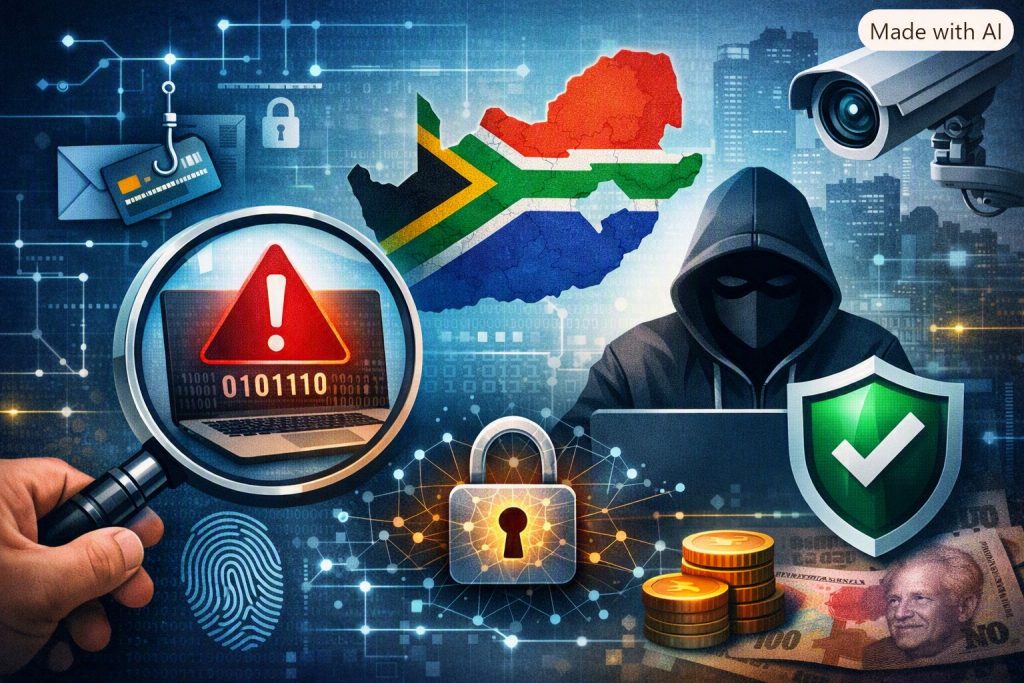
South African businesses in recent years have experienced many digital fraud cases. As almost every organisation depends on online banking, cloud platforms, email, e-commerce, digital payments and remote working, businesses are vulnerable to digital fraud in South Africa. The fraudsters can exploit compromised credentials, phishing emails, fake invoices, identity theft, social engineering and unauthorized system access to steal money or sensitive information. For South African businesses, responding effectively requires strong internal controls, 24/7 monitoring, documented incident-response procedures and professional digital forensic investigation.
What is Digital Fraud in South Africa?
Cyber fraud in South Africa refers to fraudulent activity carried out through computers, mobile devices, online platforms, email, digital payment systems, or other electronic technologies to obtain money, information, access or another unlawful benefit. Some common business fraud in South Africa includes-
- Business email compromise
- Phishing
- Identity theft
- Online payment fraud
- Fake supplier invoices
- Account takeover
- Payroll Manipulation
- Unauthorized Transactions
Digital fraud can cause direct financial losses while also creating reputational, operational, legal and regulatory consequences.
How can businesses detect, investigate, and prevent digital fraud in South Africa?
- Monitoring Transactions, Systems and User Behavior: To identify online fraud, businesses must 24/7 monitor financial transactions, login activity, email accounts, privileged user actions and changes to supplier or customer information. Unusual login locations, multiple failed authentication attempts, unexpected password resets, unusual payment requests or transactions outside normal business patterns can highlight potential fraud. Automated alerts and risk- centric monitoring can help security and finance teams track suspicious activity earlier. Many professional digital forensic experts use data analytics and AI-based risk profiling and fraud detection software in South Africa to identify and manage fraud and compliance risks.
- Preserve Digital Evidence: When you suspect fraud, you must not delete your emails, modify affected devices or reset systems without first considering the evidence that may be required. The cyber security experts will use certain relevant evidence, including emails, message headers, login records, transaction histories, access logs, CCTV footage, cloud records, computer files and mobile device data as evidence. They can preserve and examine this information using defensible forensic procedures. Maintaining an appropriate chain of custody is important when evidence may later be presented to law enforcement, regulators, lawyers, insurers or court.
- Structured Digital Forensic Investigation: Fraud detection for businesses must establish-
- What happened
- When it happened
- How it happened
- Which accounts or systems were involved
- What information was accessed
- Who may have been responsible
The digital forensic specialists can analyze computers, mobile devices, email accounts, cloud environments and system logs to reconstruct a timeline. They identify deleted files, suspicious communications, unauthorized access, manipulated documents or connections between apparently unrelated events.
- Strengthen Internal Controls and Employee Awareness: Prevention should blend technology with employee awareness. Businesses should implement multi-factor authentication, least privilege access, strong password controls, secure backups, endpoint protection, email security and payment verification procedures. Finance teams must verify changes to banking details and large or unusual payment requests when instructions arrive via mail. The workforce must receive regular training on phishing, social engineering, suspicious links, impersonation and business email compromise. Access to sensitive information must be limited as per job responsibilities, with important actions logged and reviewed.
- Establish an Incident Response and Reporting Process: Businesses should have written procedures explaining what employees must do when they suspect fraud. The process should identify the appointment of digital forensics experts, the employee who secures the system, who communicates with management, and who engages legal counsel. Also, it must determine when legal counsel and other law enforcement authorities must be contacted.
Case Study
A South African company discovers many unauthorized payments made to a newly added supplier account. The finance team did an initial investigation to identify online fraud and suspected an employee, as the payment instructions appeared to have come from an unauthorized email account. The company hired a professional digital forensic expert to dig into the matter in detail and track the real culprit. The investigator preserved relevant email and system evidence, examined authentication records and reconstructed the timeline of events. The cyber forensic specialist found that an employee’s email credentials had been compromised through a phishing attack. The attacker accessed the mailbox, monitored legitimate supplier communications and subsequently sent fraudulent banking detail instructions that appeared genuine. Login records, email metadata and other digital evidence helped establish the sequence of events. The forensic findings allowed the company to understand the actual attack path instead of incorrectly blaming an employee. The forensic experts secured the compromised account, reviewed affected transactions, strengthened authentication controls and provided relevant evidence to its legal and law enforcement teams. This case study shows how digital forensic investigation can turn scattered electronic records into a defensible timeline of events.
Protect your Business from Digital Fraud
Digital Fraud can affect businesses of every size in South Africa. However, early detection, strong controls and professional investigation can improve an organization’s ability to respond. Suspecting online fraud in South Africa? If so, do not rely on assumptions; work with experienced digital forensic professionals to identify what happened, preserve key evidence and establish facts.
FAQs
- How to detect digital fraud?
The TCG Forensics experts preserve and analyze digital evidence such as emails, devices, system logs, transaction records and metadata to reconstruct what happened and identify relevant evidence. - What are modern fraud monitoring systems digital forensic experts use to detect fraud?
Modern Fraud Monitoring Systems include AI-driven transaction monitoring, user and entity behaviour analytics, anomaly detection, real-time alerts, SIEM platforms and automated risk- scoring tools to identify suspicious activity. - What do South African businesses do if they suspect digital fraud?
They must immediately contact the experienced digital forensic specialists of TCG Forensics to help detect fraud and provide robust measures to prevent the same in future.
About the Author
With over two decades of experience in digital investigations, cybercrime analysis, and digital evidence management, TCG Forensics delivers reliable, precise and court-admissible digital forensic services. By blending the cutting-edge forensics technologies with proven investigative methods, the team identifies and preserves key digital evidence to support legal proceedings, corporate investigations and corporate investigations and cyber security related cases.